
Advertising and promotion of medicines Controlled drugs Medicines licensing Over-the-counter (OTC) medicines Pharmacist and technician responsibilities Pharmacy inspections and enforcement Pharmacy premises standards Remote and online pharmacy services Safe dispensing practices
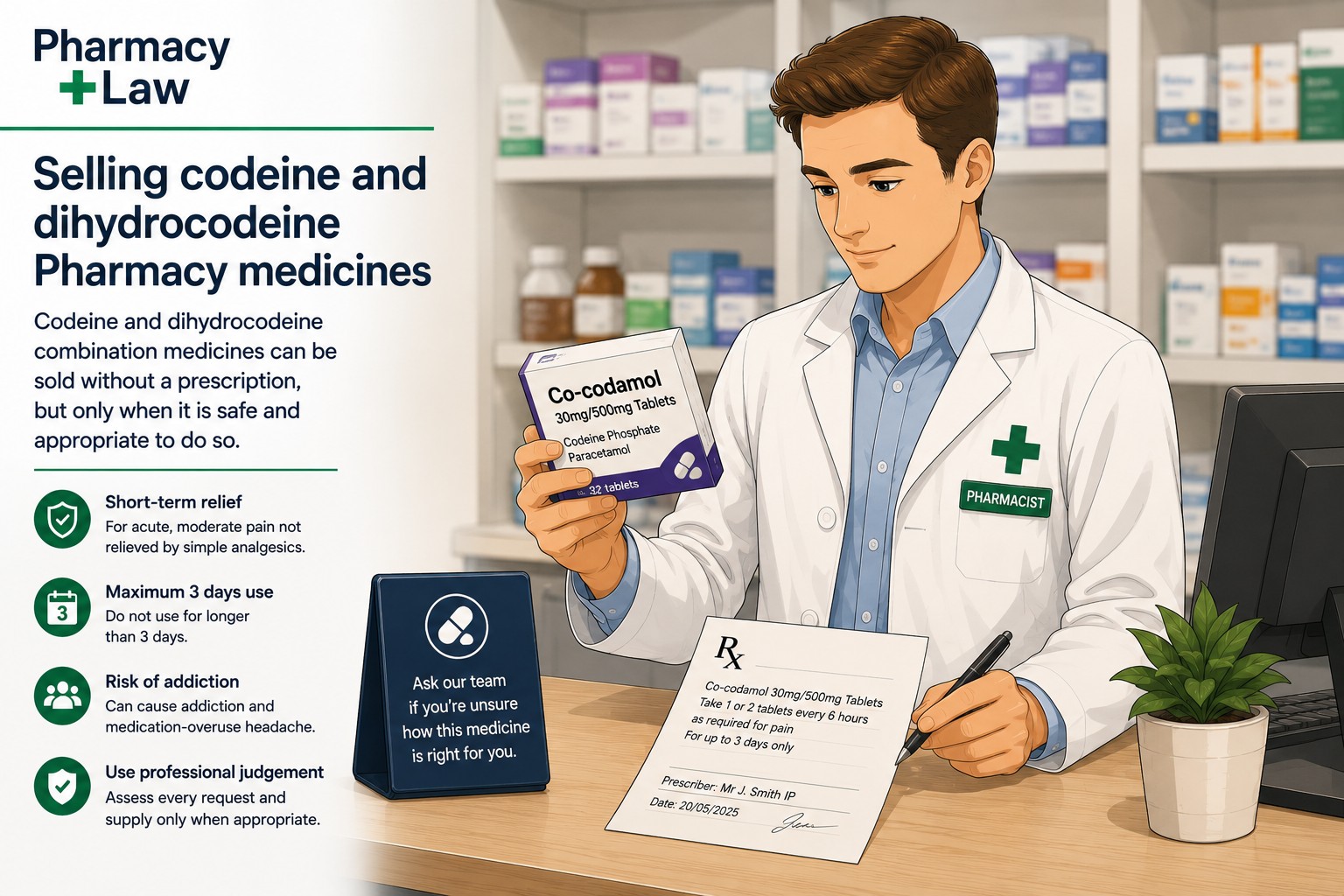
Selling codeine and dihydrocodeine Pharmacy medicines
Certain medicines containing codeine or dihydrocodeine may be sold without a prescription as Pharmacy medicines. However, these medicines are opioids with recognised risks of dependence, misuse and overdose. Combination analgesics may also cause serious harm through excessive consumption of their other ingredients, such as paracetamol or ibuprofen.
Pharmacy owners, responsible pharmacists and other pharmacy professionals must therefore ensure that requests are appropriately assessed and that these medicines are supplied safely.
The legal position comes from several sources: