Controlled drugs Emergency supply of medicines Pharmacist and technician responsibilities Prescription requirements Safe dispensing practices

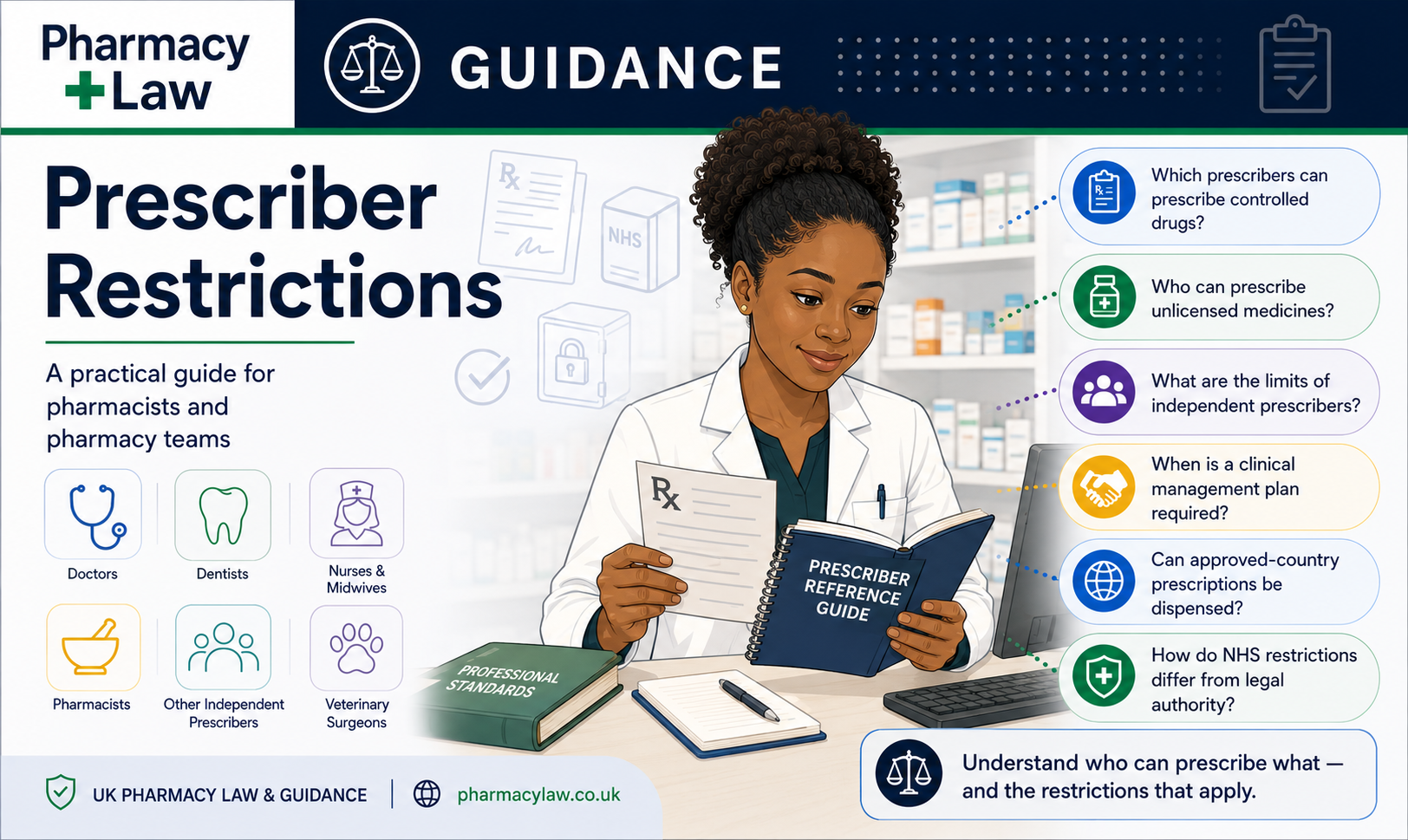
Prescriber restrictions

Doctors, dentists and veterinary surgeons acquire prescribing powers through their professional registration, although doctors must also hold a licence to practise. They have been joined by independent and supplementary prescribers from several other healthcare professions who may prescribe after completing an approved education programme and obtaining the relevant annotation on their professional register.

The existence of a legal prescribing power does not mean that a prescriber may appropriately prescribe every medicine. All prescribers must:

This article summarises the principal legal restrictions applying to each prescriber group.

Medicines licensing Pharmacist and technician responsibilities Prescription requirements Safe dispensing practices

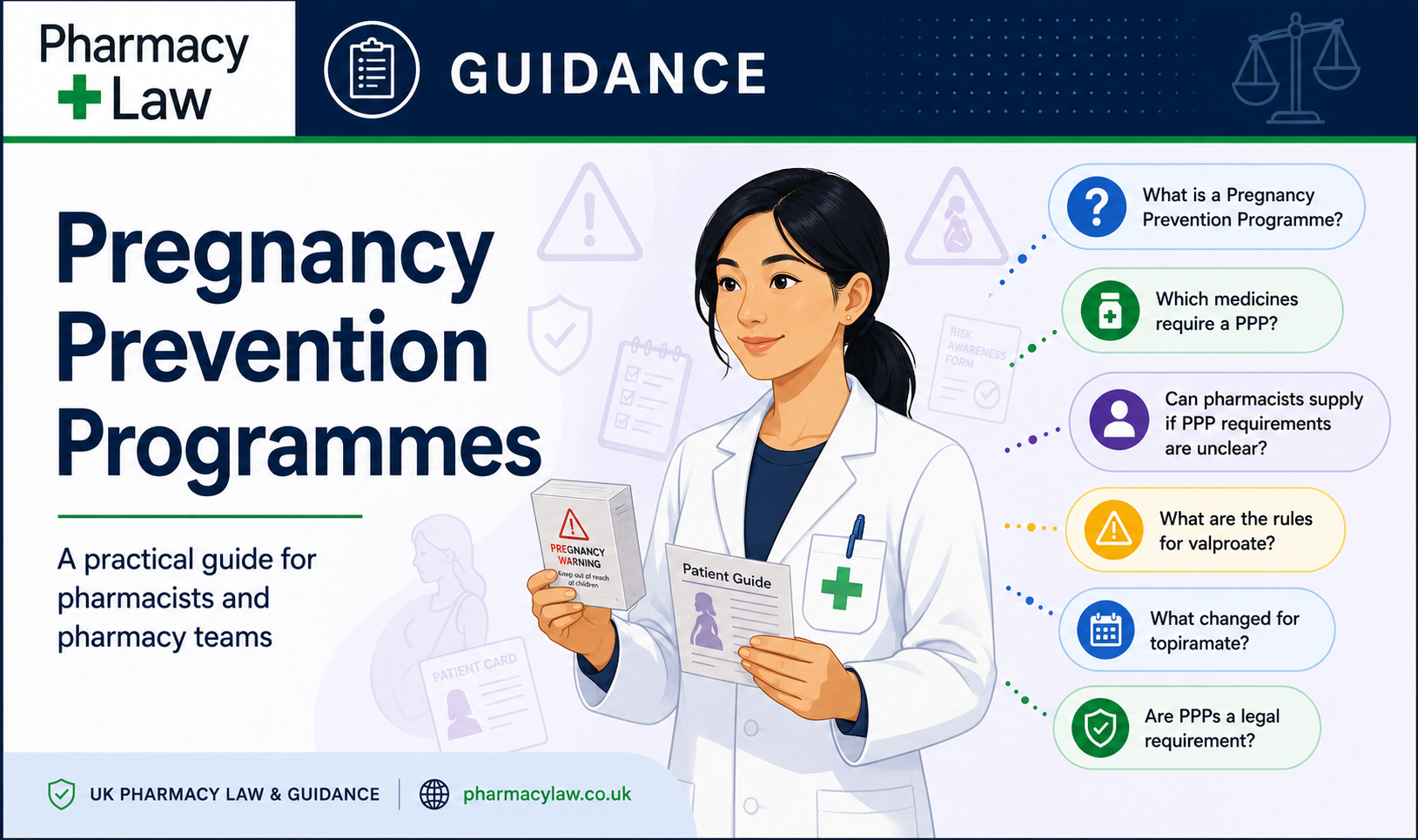
Pregnancy Prevention Programmes

Some medicines carry a high risk of causing serious harm if taken during pregnancy. These risks may include congenital malformations, neurodevelopmental disorders, foetal growth restriction, miscarriage or other serious harm to the unborn child.

Pregnancy Prevention Programmes, often shortened to PPPs, are regulatory risk minimisation measures designed to reduce the chance of pregnancy before, during and shortly after treatment with these medicines. They are particularly important for medicines known or suspected to be teratogenic, including oral retinoids, valproate, topiramate, thalidomide, lenalidomide and pomalidomide.

For pharmacy teams, the important legal and practical point is this: a PPP is not usually a standalone piece of legislation called a “pregnancy prevention law”. Instead, the requirement normally arises from the medicine’s marketing authorisation, Summary of Product Characteristics, Patient Information Leaflet and MHRA-approved risk minimisation materials. The MHRA describes Pregnancy Prevention Programmes as measures that may be put in place where a medicine has a known or potential teratogenic effect: https://www.gov.uk/government/publications/risk-minimisation-measures-for-medicines/risk-minimisation-measures-for-medicines

Patient group directions (PGDs) Prescription requirements

Patient Specific Directions (PSDs)

Patient Specific Directions (PSDs) are a core legal mechanism used across UK healthcare to authorise the administration or supply of medicines to an individual patient.

Unlike Patient Group Directions (PGDs), PSDs are not explicitly defined in primary medicines legislation, but they are fully recognised in practice as part of the legal framework for administering medicines.

A PSD is:

Controlled drugs Prescription requirements

British Military Prescriptions (FMed 296): How Community Pharmacies Should Handle Them

Military prescriptions in the UK are usually issued on FMed 296 forms rather than standard NHS FP10 forms. For community pharmacy teams, the key point is that FMed 296 prescriptions are generally intended for Ministry of Defence (MOD)-contracted pharmacies, not routine NHS pricing.

This article explains what an FMed 296 is, when it can be dispensed, and what happens if it is presented to a non-contracted pharmacy.

Military prescription handling is a mix of general medicines law and specific MOD/NHSBSA operational arrangements. The core legal framework for prescription-only medicines remains the

Pharmacist and technician responsibilities Prescription requirements

Unlicensed Medicines (“Specials”) and Foreign Prescriptions: What Is Allowed in the UK?

Unlicensed medicines—commonly referred to as “specials”—are subject to strict legal controls in the UK. While prescriptions from certain European countries are recognised under UK law, this does not extend to unlicensed medicines.

This article explains when specials can be supplied, and why foreign prescriptions cannot be used for these medicines.

“Specials” are unlicensed medicines supplied to meet the special clinical needs of an individual patient.

Controlled drugs Prescription requirements Safe dispensing practices

European Prescriptions

Pharmacists in the UK may occasionally be presented with prescriptions issued abroad. The legal position is specific and limited—only certain prescriptions from defined countries are recognised.

This article explains which foreign prescriptions are valid, what “Europe” means in law, and what pharmacists must check before dispensing.

The supply of prescription-only medicines (POMs) is governed by the Human Medicines Regulations 2012:
https://www.legislation.gov.uk/uksi/2012/1916/contents

Controlled drugs Emergency supply of medicines Pharmacy premises standards Prescription requirements Safe dispensing practices

Faxed and Digital Prescriptions

Pharmacies are frequently presented with faxed prescriptions, emailed copies, or photos on a patient’s phone. While these may appear convenient, they raise important legal and patient safety issues.

This article explains what is and is not legally valid, and how pharmacists should approach these situations.

Under the Human Medicines Regulations 2012:
https://www.legislation.gov.uk/uksi/2012/1916/contents

Controlled drugs Pharmacist and technician responsibilities Prescription requirements Safe dispensing practices

Dental Prescriptions

Dental prescriptions can create uncertainty in practice, particularly around what dentists are legally allowed to prescribe and what pharmacists can safely supply. This article clarifies the legal position and the key practical rules.

Dentists are recognised as appropriate practitioners under the Human Medicines Regulations 2012:
https://www.legislation.gov.uk/uksi/2012/1916/regulation/214/made

👉 This means:

Pharmacist and technician responsibilities Prescription requirements

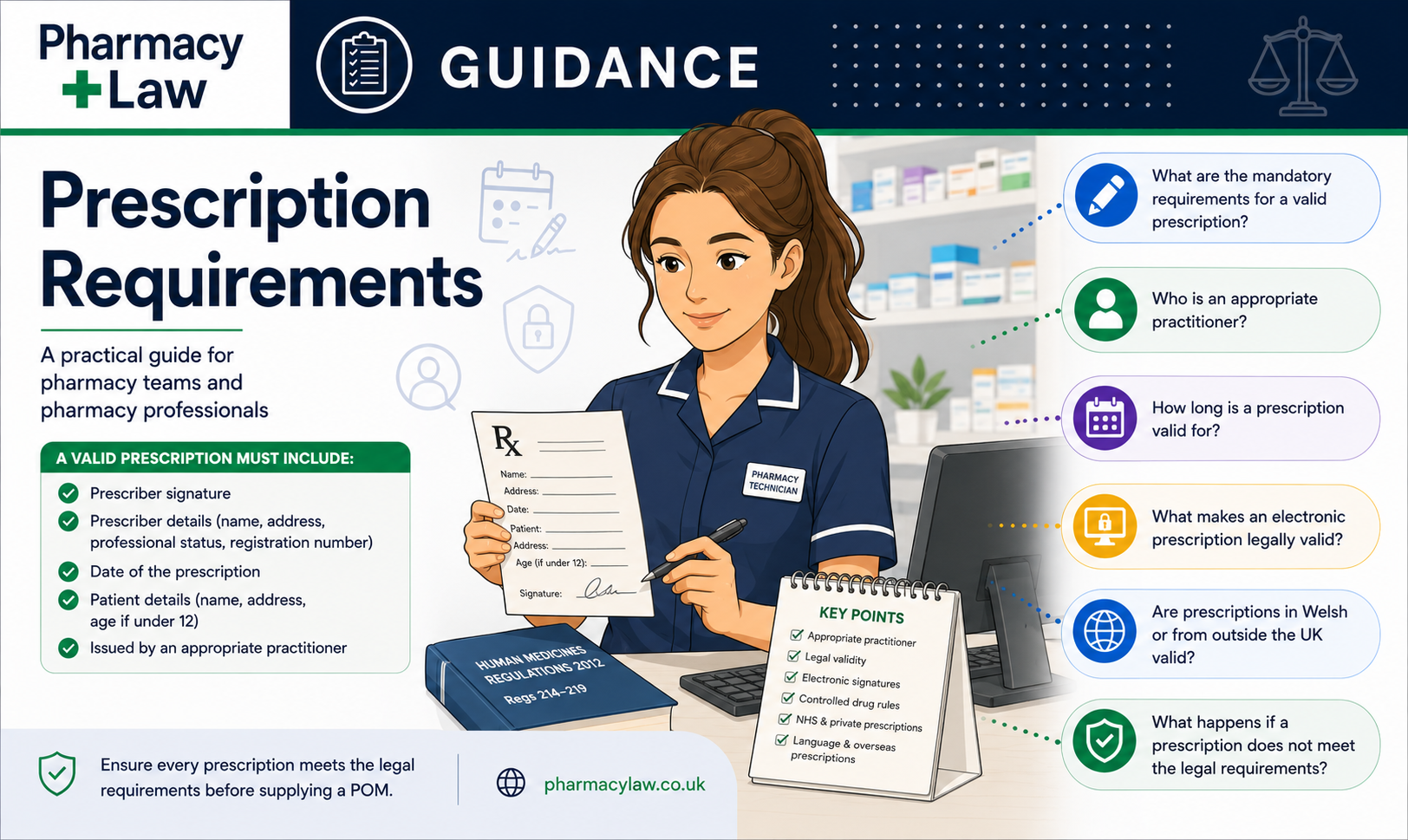
UK Prescription Requirements

For a prescription-only medicine (POM) to be supplied lawfully in the UK, the prescription itself must meet specific legal requirements. These requirements are set out in the Human Medicines Regulations 2012 (HMR 2012), particularly:

https://www.legislation.gov.uk/uksi/2012/1916/contents

If these requirements are not met, the prescription may be legally invalid, and the medicine must not be supplied.

Controlled drugs Medicines licensing Pharmacist and technician responsibilities Prescription requirements Safe dispensing practices

GnRH Analogues and Puberty Suppression

Gonadotrophin-releasing hormone (GnRH) analogues are used in clinical practice to suppress puberty. In the UK, their use in children and young people for gender incongruence or gender dysphoria is subject to specific legal restrictions.

Pharmacists must ensure they understand both the legislative framework and the practical implications for dispensing, particularly where prescriptions originate from private or non-UK prescribers.

The sale and supply of medicines in the UK is governed by the
https://www.legislation.gov.uk/uksi/2012/1916/contents
(Human Medicines Regulations 2012).