Advertising and promotion of medicines Controlled drugs Medicines licensing Over-the-counter (OTC) medicines Pharmacist and technician responsibilities Pharmacy inspections and enforcement Pharmacy premises standards Remote and online pharmacy services Safe dispensing practices

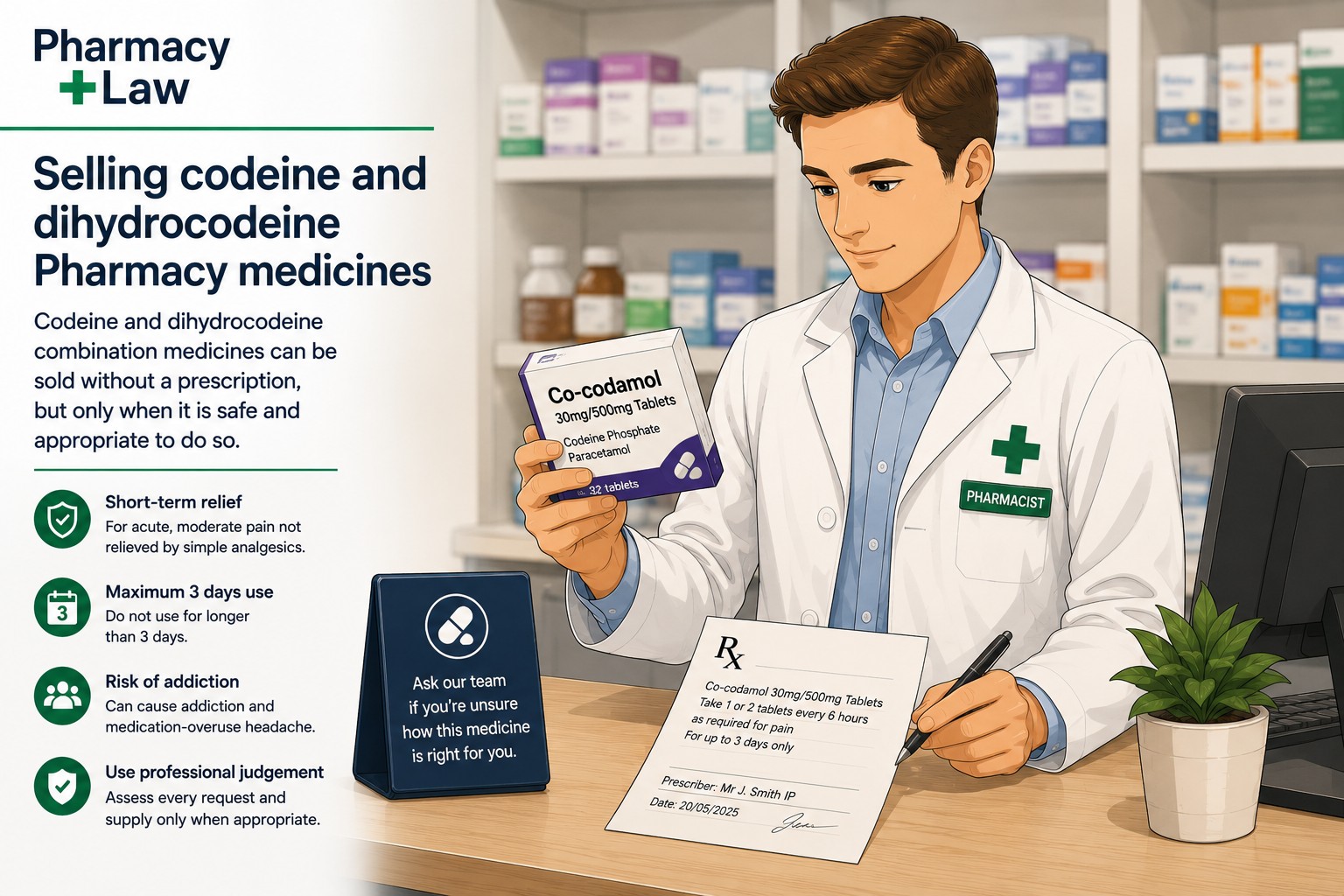
Selling codeine and dihydrocodeine Pharmacy medicines

Certain medicines containing codeine or dihydrocodeine may be sold without a prescription as Pharmacy medicines. However, these medicines are opioids with recognised risks of dependence, misuse and overdose. Combination analgesics may also cause serious harm through excessive consumption of their other ingredients, such as paracetamol or ibuprofen.

Pharmacy owners, responsible pharmacists and other pharmacy professionals must therefore ensure that requests are appropriately assessed and that these medicines are supplied safely.

The legal position comes from several sources:
Medicines licensing Over-the-counter (OTC) medicines Remote and online pharmacy services Safe dispensing practices

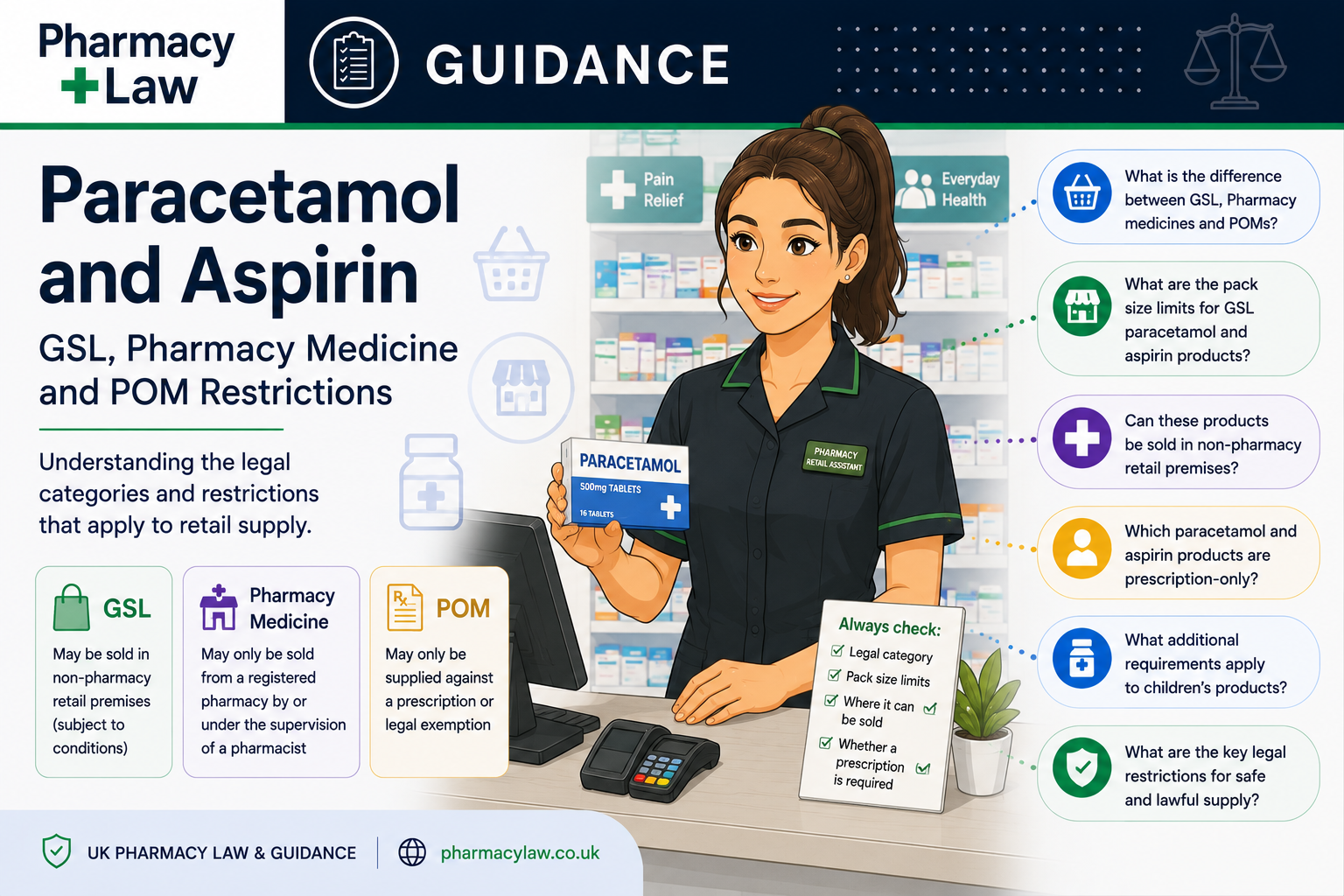
Paracetamol and aspirin: GSL, Pharmacy medicine and POM restrictions

Paracetamol and aspirin are familiar medicines, but their legal status is not always straightforward.

Some paracetamol and aspirin products can be sold from ordinary retail premises as General Sale List medicines. Some can only be sold from a registered pharmacy as Pharmacy medicines. Some products are prescription-only medicines. The correct legal category depends on the exact product, including its formulation, strength, pack size, marketing authorisation and presentation.

This matters because the legal category affects:

Controlled drugs Handling complaints and patient safety Pharmacist and technician responsibilities Pharmacy inspections and enforcement Pharmacy premises standards Record-keeping requirements Remote and online pharmacy services Safe dispensing practices

Online Pharmacies and Remote Prescribing

The growth of online prescribing and distance-selling pharmacy services has introduced significant risks around the safe and appropriate supply of medicines. In response, the General Pharmaceutical Council (GPhC) has strengthened its regulatory expectations for pharmacies operating remotely, particularly where prescribing is carried out online.

Pharmacy owners, superintendent pharmacists, and responsible pharmacists must ensure that any supply made through an online model meets both legal requirements and professional standards.

Registered pharmacies in Great Britain are regulated by the General Pharmaceutical Council under the Pharmacy Order 2010, which gives the GPhC enforcement powers over pharmacy owners, superintendent pharmacists, and pharmacy professionals.